
I'm posting a guest post of a guest post today, followed by a related article that is a continuation of the story. This man's story is an awesome account of God's grace and incredibly encouraging to me. The second article talks about sponsoring a child, but the point for for all of us is that anything we each can do to help one orphan can be used by God to have ripple effects. Happy reading!
Kelly blogs at Love Well, and she wrote this post last week for The Idea Camp’s website about her husband’s experience of adoption. I found it very compelling, and also related to their story on a personal level, so I asked her if I could share her post here.
As the wife of an adopted orphan, I am blessed beyond expression when I watch a family adopt. It seems like the Holy Spirit is moving today’s generation to live out James 1:27. Everywhere I turn, Christians are talking about orphan care and foster parenting and rescuing children out of poverty. My soul swells with encouragement.
But you know what else is encouraging? The fact that the Church is starting to be honest about the difficulties adopting families can face, especially when adopting a child from hard places. Because while adoption is a holy calling, and there is a side to it that thrills with hope and love and anticipation, it is also hard, unspeakably hard and filled with grief, especially if you adopt a child like my husband.

Many of you know Corey’s story. He is the son of an American GI, born to a Korean woman, deserted at an early age, left to survive on the streets or, worse, be abused in various foster homes. Through a series of God-moments, he was adopted by an American family, a couple who had adopted a Korean baby a few years earlier. This time, they hoped to adopt a Korean boy, an older brother for their bouncy baby girl, a son who would complete their family.
Suffice it to say, they had no idea what they were getting into. The boy they picked up at the Minneapolis airport was probably close to seven years old (no birth certificate, so we don’t know his age), a child who was riddled with disease and parasites (on a doctor’s advice, they burned everything he brought with him from Korea), a boy who had never known love or stability or family.
He didn’t speak a word of English. He didn’t know how to eat the split pea soup they fed him for his first meal. (Poor choice, perhaps.) Once he did understand they had food for him in the house, he hoarded it and hid it in his room. He tried to run away when they took him to school, because he thought he was being left at another orphanage.
He didn’t attach easily (or at all), preferring instead to stay safely withdrawn. He had frequent nightmares that he never explained. He didn’t trust. He didn’t cuddle. He didn’t tell his parents anything about his past. He mocked therapy.
Corey was not the sweet little boy his parents expected. He was streetwise, scared and suspicious, even years after his adoption was finalized. I know his parents struggled. How do you love a boy who won’t let himself be loved? Did they do the right thing by adopting him? Would he have been better off in his own country?
To their credit and because of God’s great mercy, they persevered. They didn’t send him back. They kept loving him, kept feeding him, kept clothing him. I’m sure adoptive parents today, armed with volumes of knowledge about orphan psychology, would view their actions as clumsy and sometimes misguided. But back then, knowledge about children coming from hard places was nil. They had no choice but to grope through the dark and do the best they could.
That is why I am so heartened to see a honest discussion today about how we can support families who adopt kids from hard places. Jedd Medefind, president of the Christian Alliance for Orphans, says it best:
We have every reason to celebrate the wonder of adoption, explore its theological and earthly significance, and highlight the blessing it can be to both child and parent. We must keep the Gospel always at the very center, as both our motivation and the wellspring of perseverance in difficulty. But we must also increasingly place a strong accent on both preparation for potential challenges of adoption and provision of support when challenges do arise. We must not only affirm this need, but also lead in helping to meet it.
Perhaps it may sound overblown, but I believe there is no single factor with greater potential to derail the growing Christian commitment to adoption and foster care than failure in this point. This is especially true as Christian families increasingly open themselves to the adoption of older and special needs children. In short, for every enthusiastic but ill-prepared and poorly-supported adoptive family that crashes on the rocks of unanticipated challenges, dozens of others will permanently write off the call to adopt.
- from The Most Significant Challenge Facing Adoption in America
I am so glad Corey’s parents didn’t permanently shipwreck on those rocks. And in a twist of fate only God can orchestrate, today Corey is on the board of the Christian Alliance for Orphans, raising awareness of the plight of orphans around the world.
The discussion will continue at The Idea Camp: Orphan Care conference next month in Arkansas. If you aren’t aware of The Idea Camp yet – I tell people it’s like a Christian TED, only the participants are the idea gurus, not necessarily the speakers. But don’t take my word for it;click through and check it out.
And if you don’t make it to The Idea Camp in February, you might consider attending the Christian Alliance for Orphans Summit in Louisville, Kentucky in May with me and Corey. Just don’t try to hug Corey when you see him. He’s an orphan adopted from a hard place. He has issues.
The Ripples of Child Sponsorship
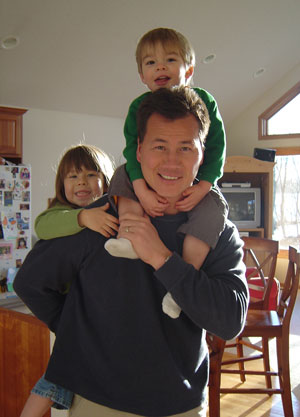 And, as you might imagine, he has quite the passion for orphans and the poor.
No comments:
Post a Comment